
On-site inspection and moisture finding
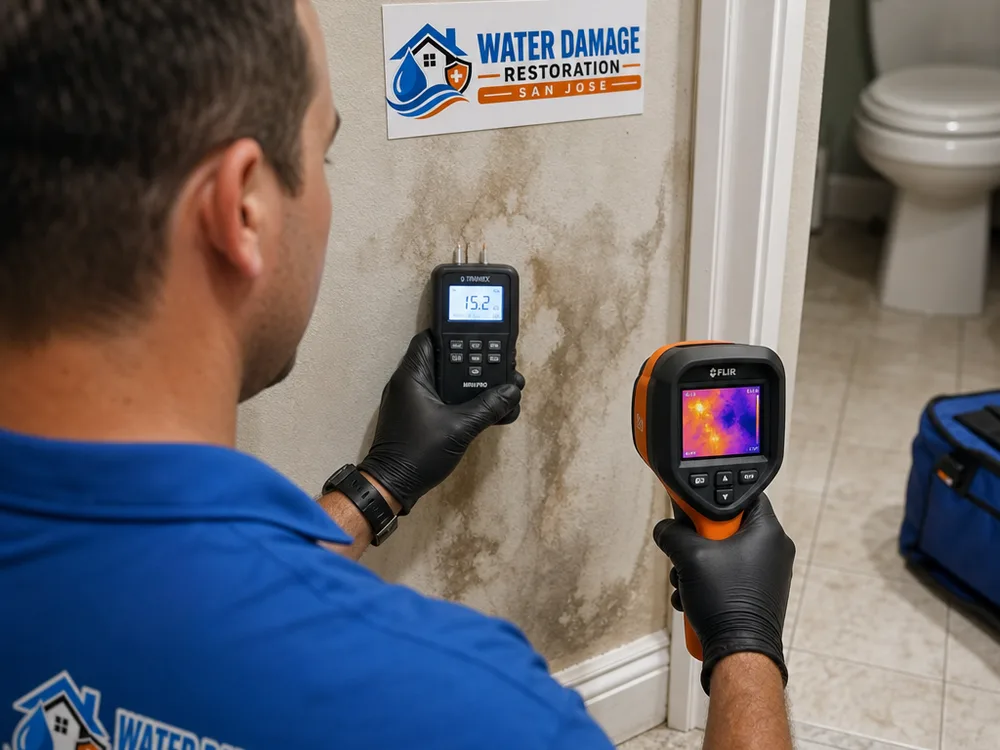
We look for where water is coming from and where it traveled, including adjacent rooms and concealed cavities when accessible.
Serving San Jose, California & surrounding areas
24/7 Emergency Response
Mold removal in San Jose, California
If you smell a musty odor, see staining, or had a recent leak, act quickly. Our certified team inspects, contains, removes mold safely, and leaves you with clear next steps for repair and prevention.
Contain the source, not just the surface
Searching for mold removal San Jose usually means something is already wrong: a slow plumbing leak under a sink, a bathroom fan that never really cleared humidity, or water intrusion after a storm. Mold can spread behind drywall, under flooring, and inside cabinets, so surface cleaning rarely solves the problem.
Our approach is straightforward: we identify the moisture source, confirm what materials are affected, isolate the work area so spores do not drift through the building, remove contaminated materials that cannot be salvaged, and clean remaining structural surfaces using methods appropriate for mold remediation. You get a written scope, photos as needed, and a plan for putting the space back together.
We handle mold removal for both homes and commercial spaces across San Jose, with practical coordination for condos, multi-family properties, and tenant-occupied units where access and communication matter as much as the work itself.
Local moisture patterns
San Jose homes often experience mold in the same few places because moisture tends to hide: around tubs and showers, under kitchen sinks, near laundry hookups, and at windows where condensation collects. In parts of the city with a lot of older construction, you can also run into original plumbing lines and older bath enclosures that have seen years of small leaks.
In Downtown San Jose and Japantown, tighter lots and older buildings can mean limited ventilation and shared walls, so containment and air control are especially important to keep adjacent areas protected. In Willow Glen and Rose Garden, many homes have older bathrooms and crawlspaces where a slow drip can go unnoticed. In Evergreen and Almaden Valley, larger homes often have more bathrooms and complex plumbing runs, which raises the odds that a small leak stays hidden until odor or staining appears.
If you are also dealing with active moisture after a leak or flood, starting with water damage restoration often prevents the same problem from returning after cleanup.
A complete remediation scope
We look for where water is coming from and where it traveled, including adjacent rooms and concealed cavities when accessible.
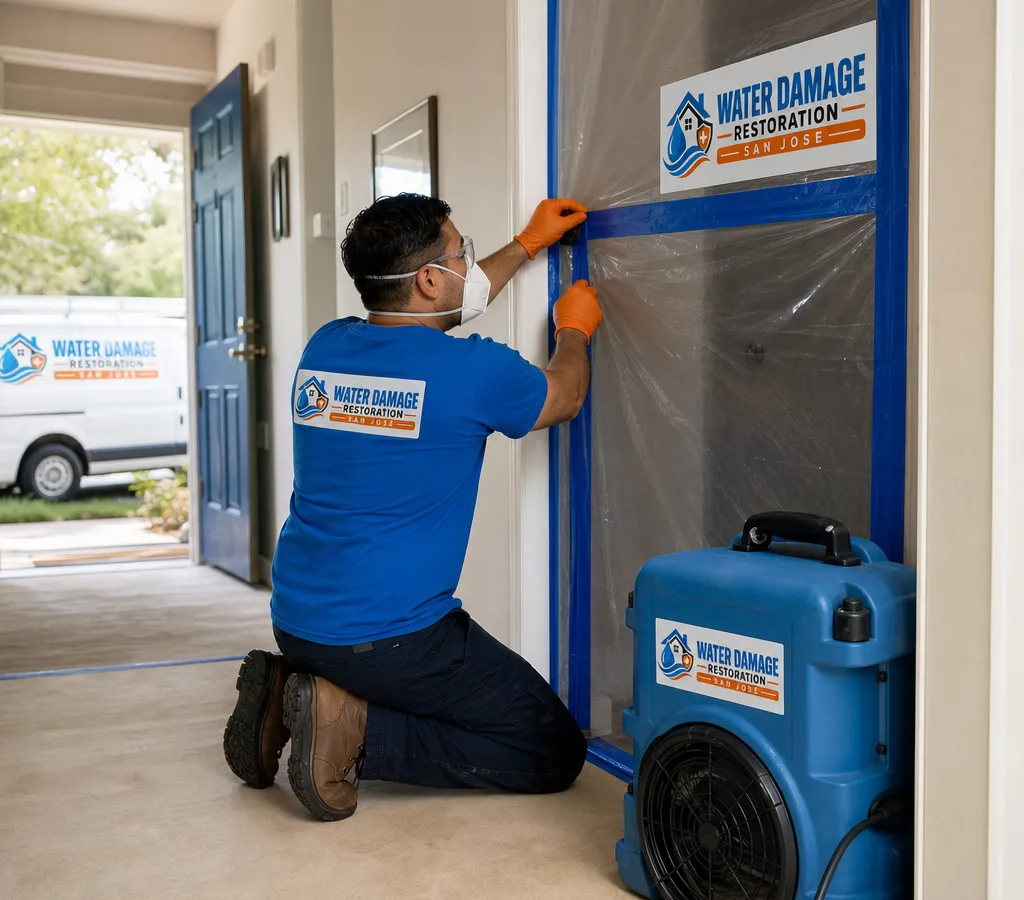
Critical work areas are isolated with poly sheeting and kept under negative pressure so spores stay controlled during removal.
When drywall, insulation, baseboards, or cabinet components are contaminated, removal and proper disposal is often the correct fix.
Remaining framing and surfaces are cleaned using industry-appropriate techniques such as HEPA vacuuming and damp wiping.
Air movement and dehumidification help dry the structure so mold does not immediately return once the area is closed back up.
You receive a clear scope, what was removed, what was cleaned, and what repairs or prevention steps are recommended.
Assessment through repair planning
We inspect visible growth and likely spread paths, check for elevated moisture, and discuss the building's history, including leaks, condensation, and prior repairs.
We isolate the work zone, protect floors and pathways, and set air filtration where needed to reduce cross-contamination during demolition and cleaning.
Porous materials often need to be removed to reach clean structure. We cut back to solid, dry material and keep debris controlled.
We HEPA vacuum, wipe, and clean framing and nearby surfaces. If items are salvageable, they are cleaned using appropriate methods for the material.
We dry the area as needed and confirm conditions are trending dry. Then we outline the repair path so the space can be rebuilt without trapping moisture.
Planning the remediation scope
Most mold removal projects in San Jose typically range from $1,500 to $6,500, depending on how far the mold spread and how much material must be removed. A small, contained area, such as under a sink or a section of bathroom drywall, is often $1,500 to $3,000, while multi-room or HVAC-adjacent situations can run $4,000 to $10,000+.
Final cost changes with the square footage of affected materials, whether cabinets or insulation are involved, access to crawlspaces or attics, the level of containment required, and how much drying is needed. The exact price is confirmed after an on-site inspection and a written scope.
Customer experiences
“We had a musty smell that wouldn't go away and found mold behind the vanity. The crew contained the bathroom properly, removed the damaged drywall, and explained what caused it so we could fix the ventilation.”
“They were very clear about what needed to be removed versus what could be cleaned. The work area stayed sealed off, and the house didn't end up smelling like chemicals afterward.”
Before disturbing affected materials
If you're seeing staining, bubbling paint, or persistent odor, get a professional inspection and a written remediation plan before you start tearing into walls or spraying cleaners.
Answers before remediation begins
Start time depends on current workload, but urgent situations are typically prioritized, especially when there is active moisture or a strong odor spreading through the home. If you can share where the mold is, when you first noticed it, and whether there was a recent leak, we can usually advise the next best step right away.
If mold is on or inside porous materials like drywall or insulation, removal is often the correct approach because those materials can't be reliably cleaned to the core. When growth is limited to non-porous or semi-porous surfaces, cleaning methods such as HEPA vacuuming and damp wiping may be appropriate after the moisture problem is addressed.
When containment is required, negative air pressure and HEPA filtration are common tools to control airborne particles during removal. The need depends on the location and size of the affected area, how connected the space is to the rest of the building, and whether occupants are sensitive to airborne dust and odor.
Often yes, as long as the work area can be isolated and there is a safe pathway for technicians and debris removal. For occupied homes and active commercial spaces in San Jose, we plan containment, noise, and access windows so daily routines can continue as much as possible.
Not always; many projects can be scoped based on visible conditions, moisture findings, and affected materials. Testing can be helpful when you need documentation for a third party, when symptoms persist with no visible growth, or when you want confirmation after remediation through post-remediation verification.
Avoid disturbing the area, running fans directly at visible mold, or removing drywall yourself, since that can spread particles. If there is an active leak, stop the water source if you can do so safely, and keep the area closed off until an inspection confirms the right containment plan.
Inspection, containment, and clear next steps
Tell us what you're seeing and where it's located. We'll schedule an on-site inspection, explain the containment and removal approach, and provide a written scope you can make decisions from.