
You cannot identify mold reliably by sight
Color and texture are not enough. Many materials discolor from water, soot, or age. A surface sample can confirm what you are actually dealing with.
Serving San Jose, California & surrounding areas
24/7 Emergency Response
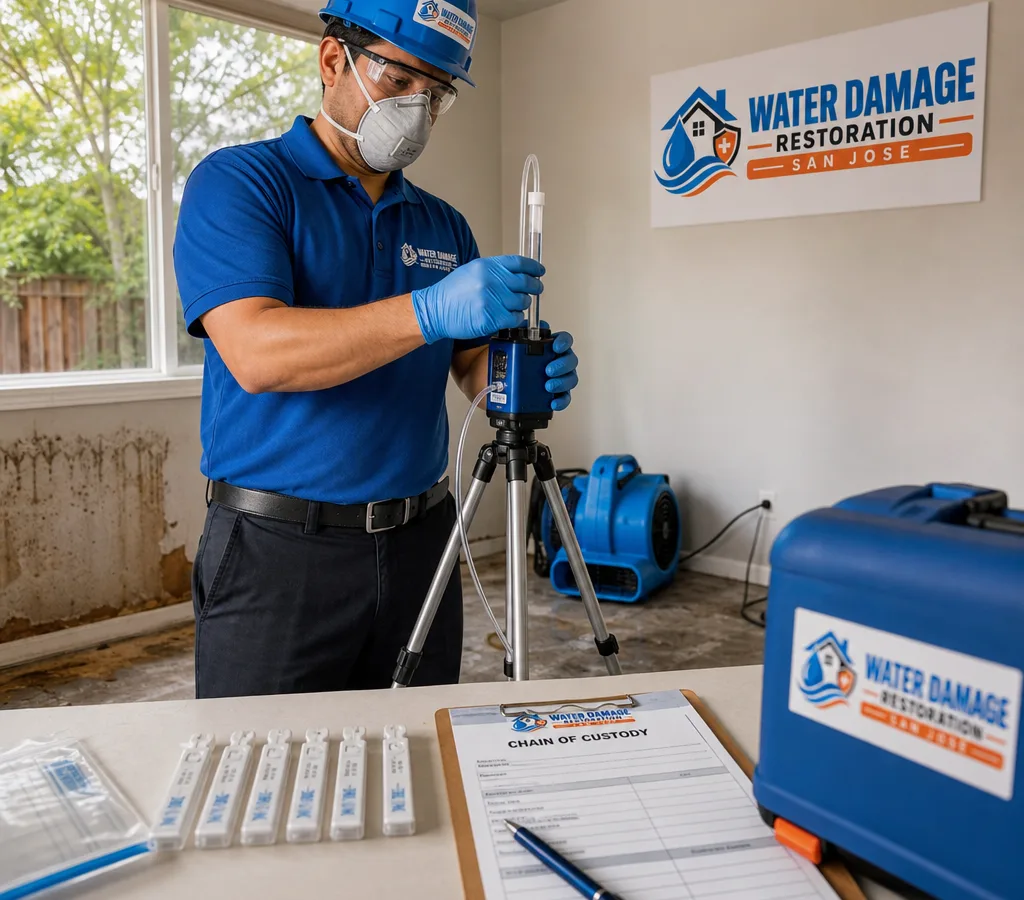
Mold testing in San Jose, California
If you smell something musty, see staining, or have health concerns, testing is the fastest way to get clear answers and a practical next step for your home or business.
Testing designed around your concern
Searching for mold testing San Jose usually means you want certainty: is it mold, where is it coming from, and what should happen next. Our team at Water Damage Restoration San Jose focuses on straightforward testing that matches the situation, whether you are dealing with a visible spot, a persistent odor, recent moisture, or a real estate deadline.
We approach testing like a decision tool, not a box to check. That means we start by understanding the building history—recent leaks, HVAC issues, condensation, and remodel work—then choose methods that can answer the specific question you have. When results come back, we explain what they mean in plain language and outline next-step options.
San Jose buildings vary widely, from older plaster and lath interiors to newer, tightly sealed construction. Both can have mold risks, but for different reasons: older materials may hide long-term moisture, while newer, efficient homes can trap humidity if ventilation is off. A good test plan accounts for that context rather than relying on a single sample type.
Inspection, sampling and interpretation
A proper mold inspection and test starts with observation. We look for moisture sources and conditions that support growth: staining patterns, warping, bubbling paint, musty odor pathways, and ventilation problems. When appropriate, we use moisture meters and thermal imaging as screening tools to narrow down where sampling makes sense.
Sampling is selected based on the goal:
Testing does not replace fixing the moisture problem. Lab results can tell you what is present and how different areas compare, but lasting resolution comes from stopping water intrusion, controlling humidity, and removing contaminated material when warranted. If you also need help after a leak or flooding, our broader water damage restoration services can support drying and repair planning so the same conditions do not return.
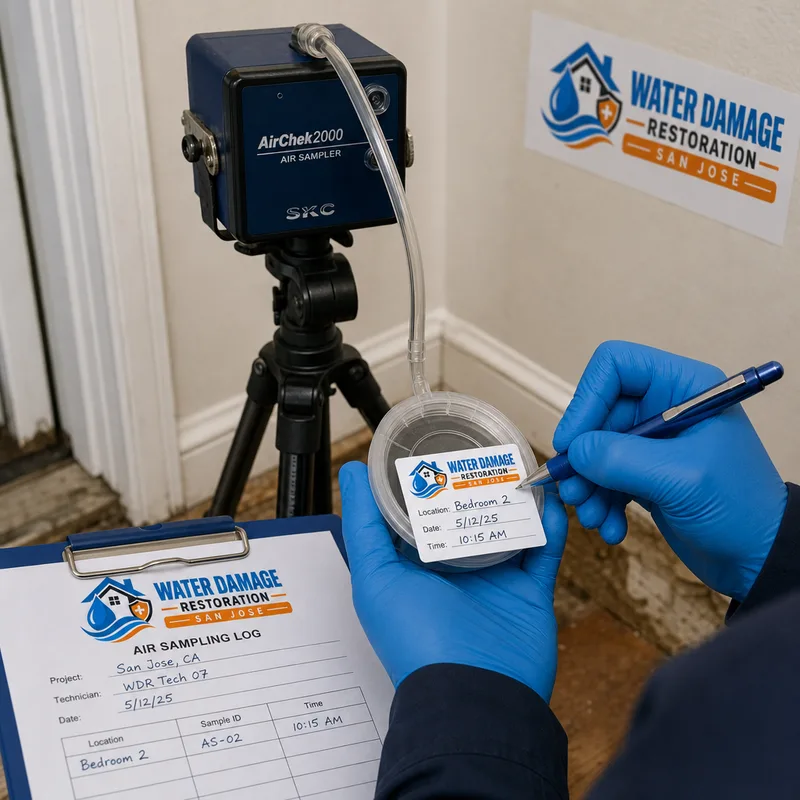
Useful evidence instead of guesswork
Color and texture are not enough. Many materials discolor from water, soot, or age. A surface sample can confirm what you are actually dealing with.
Placement, number of samples, and having an outdoor control sample affect how useful the results are. Random sampling often creates confusion instead of clarity.
Condensation near windows, a slow plumbing leak, and an HVAC drainage issue can all produce different patterns. We look for the source so the fix matches the cause.
Buyers and sellers often need a written summary and lab report with clear next steps. We can explain findings in a way that supports practical negotiations and planning.
DIY kits may flag spores that are common everywhere and do not explain whether there is an indoor source. Professional sampling focuses on answering a specific question.
From initial concern to a clear plan
We ask what prompted the concern, where you notice odors or symptoms, and any recent moisture events. We also confirm whether this is for peace of mind, a real estate timeline, or a known incident.
We review the affected areas and nearby building components. Moisture meters and thermal imaging may be used to guide where sampling will actually answer questions.
If sampling is appropriate, we collect air and/or surface samples, label locations, note conditions, and include an outdoor control for comparison when doing air testing.
Samples are sent to a qualified lab for identification and reporting. Turnaround time depends on lab capacity and the number of samples.
We explain the report in plain language and map out what to do next, including moisture correction, containment considerations, and whether professional remediation is warranted.
Planning the sampling scope
Mold testing in San Jose typically ranges from about $300 to $900 for most residential situations, depending on how many areas are sampled and whether you need air testing, surface sampling, or both. A simple single-area check with one to two samples is usually at the lower end, while larger homes, multi-room comparisons, or real estate due diligence with multiple samples trend higher.
Final price is driven by the number of samples, accessibility—including attics, crawlspaces, and tight mechanical rooms—the need for an outdoor control sample, and whether moisture investigation tools are required. The exact cost is confirmed after the on-site inspection and a written sampling plan.
Building conditions shape the test plan
In San Jose, mold concerns often trace back to moisture that is intermittent and easy to miss: a slow supply-line seep, a shower pan or grout failure, a backed-up condensate drain on HVAC, or rain intrusion around windows and stucco transitions. Testing works best when it is paired with a careful look at how water could be getting in or building up.
Neighborhood housing patterns can change the approach. In Willow Glen and other areas with older homes, we often see complex assemblies and past repairs that make it harder to know what is behind walls without targeted sampling. In Downtown San Jose and North San Jose, condos and newer construction can have tightly sealed envelopes where ventilation and humidity control matter more; air sampling plans may focus on comparing rooms served by different returns or closets with limited airflow. In Almaden Valley, larger footprints and multiple rooflines can create more potential intrusion points, which makes it important to sample based on building layout, not guesswork.
If your concern involves a workplace, we can coordinate sampling to minimize disruption and document locations clearly for facilities teams. For property managers, repeatable documentation matters: sample labels, locations, and conditions at the time of sampling should be easy to match to a floorplan and maintenance history.
Customer experiences
“We had a musty smell that came and went. The inspection explained where moisture was likely collecting, and the report was easy to understand. The next-step plan helped us decide what to fix first.”
“This was for a home purchase timeline. They scheduled quickly, took samples in the right spots, and walked us through what the lab results meant so we could move forward with confidence.”
Answers before testing begins
Get mold testing when the cause or extent is unclear, when you need documentation for real estate or a workplace, or when you suspect hidden growth based on odor or recurring moisture. If there is obvious, extensive visible growth with an active water source, the priority is stopping moisture and planning proper remediation, and testing can be used to confirm conditions or guide scope.
The on-site inspection and sampling usually takes about 30 to 90 minutes for most homes, depending on size and access to areas like crawlspaces or attics. Lab turnaround varies by lab and sample count, and we review results with you as soon as the report is received so you know the next step.
In most cases, no. Air and surface sampling is minimally disruptive, and we use PPE and careful handling of sample media. If an area has heavy visible growth or you have significant health sensitivities, we can discuss ways to limit exposure while we complete the work.
Yes, but it depends on access and the question you are trying to answer. Hidden-space testing can include cavity sampling or targeted opening by a qualified professional when justified by moisture readings or building symptoms; we will explain the pros and limitations before any intrusive step.
Air testing is most useful as a comparison tool between indoor areas and an outdoor control, combined with an inspection and moisture findings. A single air sample without context can miss hidden growth or reflect normal background spores, so we design sampling to answer a specific question, not just generate numbers.
Leave conditions as normal as possible for the day of testing: avoid heavy cleaning, running ozone generators, or using strong fragrances right beforehand, and let us know if you have been using air purifiers. If there was a recent leak, share timing and what drying steps were taken so we can interpret results correctly.
Yes. After results, we can outline practical next steps, including moisture correction, containment considerations, and what a remediation scope should include. If you choose to move forward, we can coordinate the work plan so the underlying moisture issue is addressed along with any removal and cleaning.
Start with the right testing plan
Tell us what you are seeing or smelling and where it is happening. We will recommend the right testing approach for your San Jose property, explain the results clearly, and map out the next step.