
Written findings you can use
Photo documentation, moisture readings, and a clear summary of likely causes and affected materials so decisions are based on evidence.
Serving San Jose, California & surrounding areas
24/7 Emergency Response
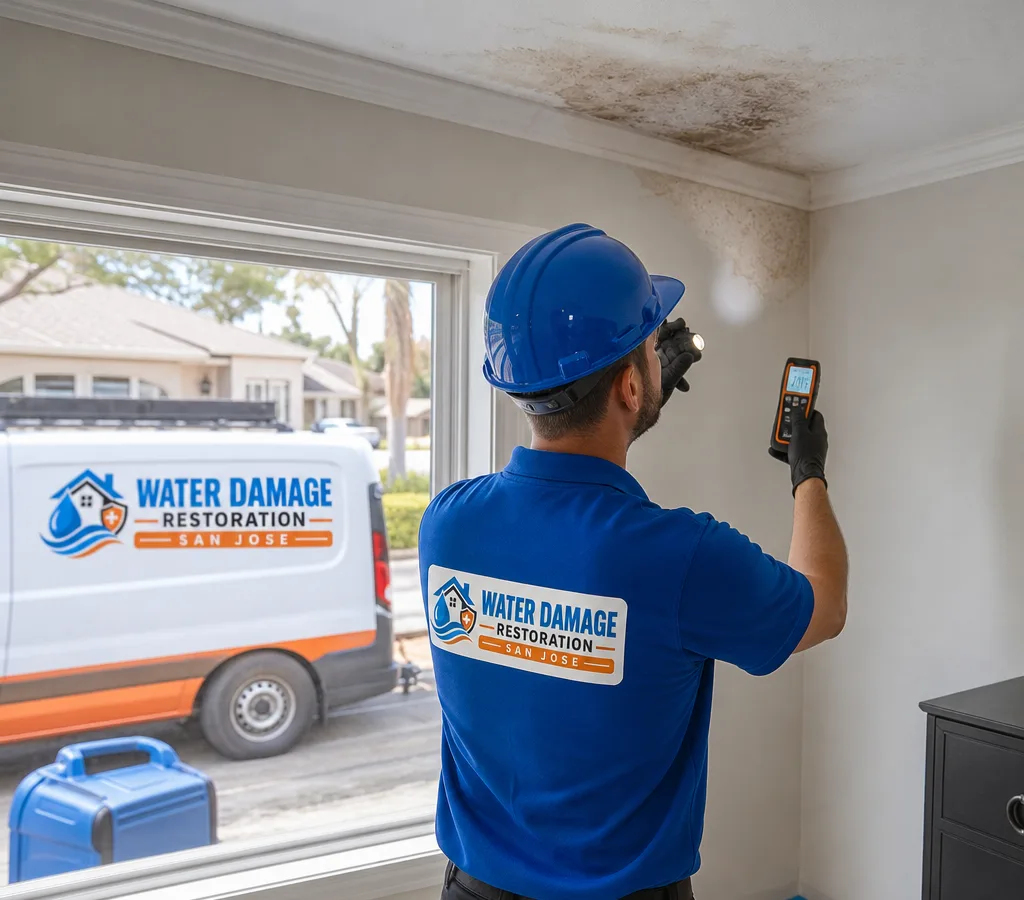
Mold inspection in San Jose, California
If you have a musty odor, visible spotting, or a recent leak, get a clear inspection with written findings and practical next steps for cleanup and repairs.
Evidence before assumptions
When you search for a mold inspector San Jose, you usually want answers to three questions: Where is the mold? Why is it happening? What do we do next?
A proper mold inspection should connect the dots between moisture and growth. In practice, that means checking the building materials that tend to stay damp after leaks—drywall, baseboards, carpet edges, cabinets, and attic insulation—mapping the moisture pathway, and documenting conditions with photos and readings. The result should be a written scope you can use to plan cleanup, repairs, or landlord and insurance conversations.
A good inspection also has clear boundaries. Inspectors can identify suspect growth, moisture conditions, and the most likely source. Lab analysis, when used, helps confirm what was collected and supports documentation, but the most useful part is often the on-site investigation: moisture measurements, visual confirmation, and where air is moving through the structure.
If you are dealing with an active leak or recent flooding, start by stopping the water and drying. Mold can begin growing on wet materials within 24 to 48 hours under the right conditions, so quick action matters. If you also need help addressing the original leak or water intrusion, our team can coordinate inspection findings into a practical plan.
Find the moisture pathway
Most mold problems are moisture problems. Our mold inspection San Jose process focuses on finding damp building materials and the conditions that keep them damp.
Typical inspection tasks include:
We work in both older and newer San Jose housing stock. Older neighborhoods such as Willow Glen often have additions, older plumbing runs, and multiple remodel layers that can hide slow leaks. Parts of Downtown San Jose with multi-family housing may require unit-to-unit assessment to determine whether moisture comes from a neighboring wall, shared plumbing chase, or exterior envelope issue. In Almaden Valley, larger homes can mean longer HVAC duct runs and more opportunities for condensation and localized humidity pockets.
You receive straightforward documentation: what we found, where we found it, the moisture conditions that support it, and a recommended next step based on building science rather than guesswork.
Useful answers and next steps
Photo documentation, moisture readings, and a clear summary of likely causes and affected materials so decisions are based on evidence.
If cleanup is needed, we outline what should be contained, what can be removed, and what should be protected to limit cross-contamination.
Sampling is used when it answers a real question—documentation, confirmation, or clearance planning—not as a default add-on.
We look for common San Jose sources: plumbing leaks in walls, shower and tub edge failures, window leaks, and condensation at cold surfaces.
If repairs are required, you receive a step-by-step plan that can be used to coordinate drying, removal, cleaning, and rebuild.
Inspection through coordinated cleanup
We start with what happened—leak, odor, visible growth, or health concerns—and which areas are most urgent, such as a child's bedroom, tenant-occupied unit, or room with recent flooding.
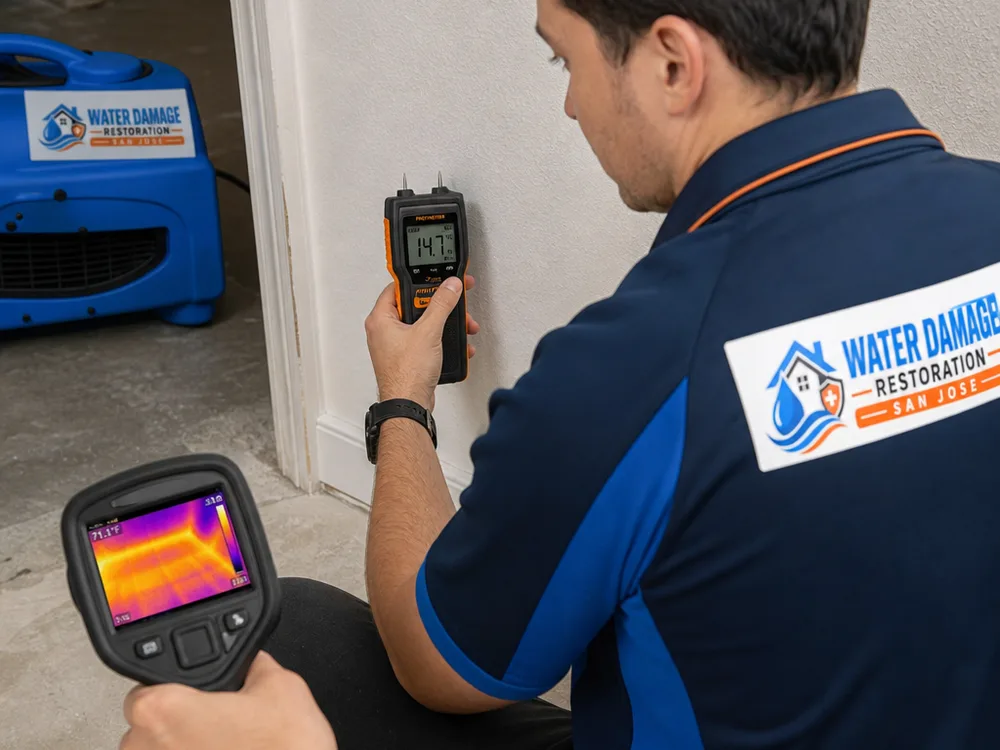
We check the reported area and likely moisture pathway. Moisture meters and thermal imaging help narrow down what needs to be opened and what can stay intact.
If sampling is appropriate, we collect the minimum needed to answer your question and document chain of custody. Results are interpreted in the context of building conditions.
You get a plain-language summary with photos and readings, plus recommendations to stop moisture, remove or clean affected materials, and prevent recurrence.
When you want us to handle the work, we translate findings into a restoration scope covering containment, demolition limits, cleaning, drying and dehumidification, and rebuild considerations.
Defining the inspection scope
Mold inspection in San Jose typically ranges from about $300 to $900+, depending on property size, how many areas need evaluation, and whether sampling and lab fees are included. A small, single-area inspection is usually at the low end, while larger homes, multi-unit situations, or inspections that require multiple samples and detailed reporting trend higher.
Final pricing depends on access to attics or crawl spaces, how much moisture mapping is needed, urgency, and whether you need documentation for a transaction or clearance planning. The exact cost is confirmed after the on-site inspection scope is defined.
Customer experiences
“We had a musty smell after a dishwasher leak and didn't want a sales pitch. The inspector found moisture in the cabinet toe-kick and along the wall behind it, explained why it wasn't drying, and gave us a written plan that made the repair and cleanup straightforward.”
“The report was clear and backed up with photos and meter readings. It helped us talk to our contractor about exactly what needed to be opened up and what didn't.”
Answers before the inspection
An inspection is most useful as soon as the water source is stopped and drying has started, because early moisture mapping can show how far water traveled. If materials are still wet, we can document moisture levels and identify what is most at risk—drywall, baseboards, cabinets, and insulation—then outline what needs drying versus removal.
If there is visible mold-like growth and a clear moisture cause, a visual inspection with moisture mapping is often enough to plan proper cleanup. Testing can be helpful when growth is hidden or ambiguous, when you need documentation for a real estate or tenant situation, or when you want a baseline before and after remediation.
We can often identify likely hidden growth by combining moisture readings, thermal imaging patterns, and building symptoms like odor and staining, but confirmation may require limited access openings. When an opening is needed, we recommend the smallest, most targeted opening that answers the question without unnecessary demolition.
In San Jose homes, common hotspots include under kitchen and bathroom sinks, around tubs and shower transitions, behind toilets, around window frames, and near laundry hookups. Attics and crawl spaces can also be affected after roof leaks, plumbing leaks, or prolonged humidity and condensation issues.
Yes, we can move from inspection findings into a restoration plan that includes containment, removal of affected porous materials, cleaning of remaining surfaces, drying and dehumidification, and coordination of repairs. If you prefer another contractor, the written findings can still guide the scope so the work stays focused.
If it is safe, stop the water source and avoid disturbing suspect growth. Do not run fans directly at visible mold, since that can move particles; normal HVAC operation is usually fine unless it is pulling air from a contaminated area. Photos from when the leak happened or notes on when odors started can help narrow down causes faster.
Start with a documented inspection
If you suspect mold after a leak, humidity issue, or recurring odor, tell us what you are seeing and where. We will schedule an inspection, document the conditions, and outline the next steps to protect the property and prevent the problem from coming back.